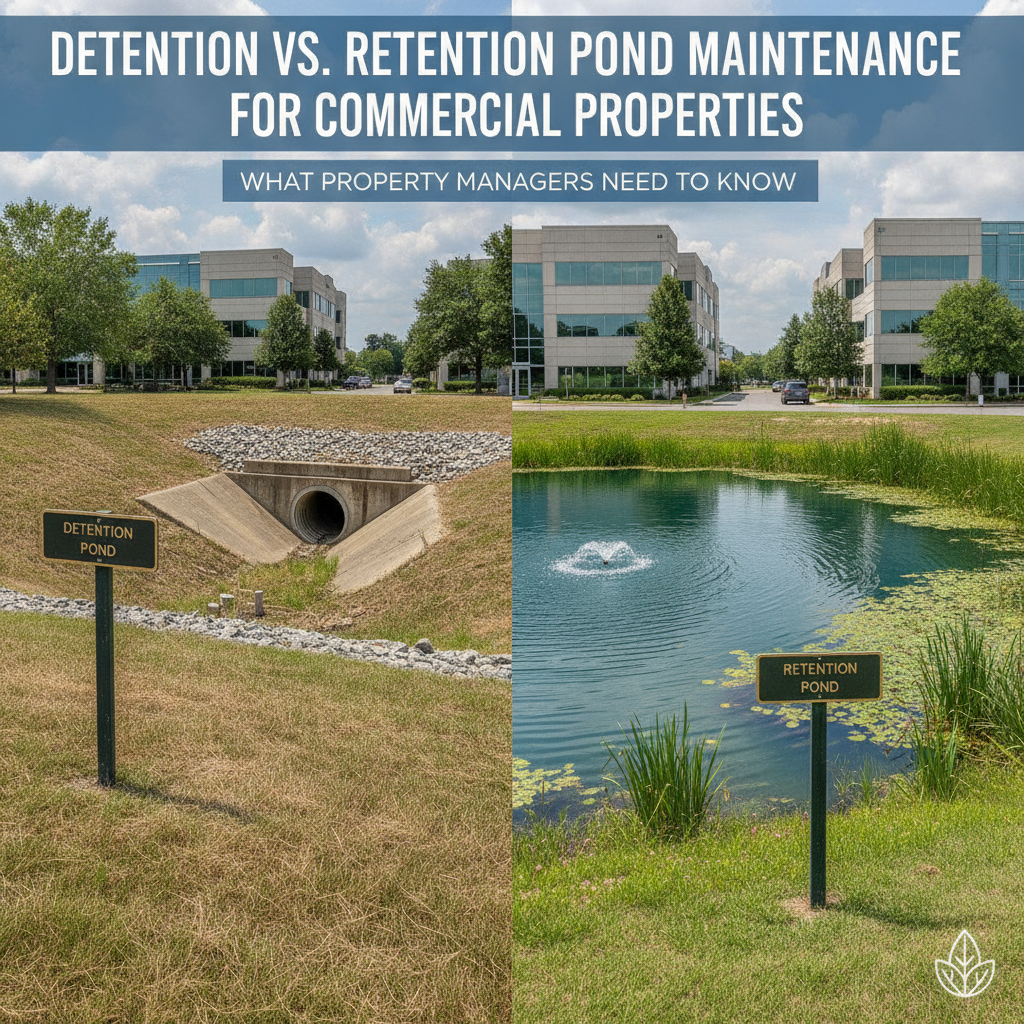




























Commercial property managers across Greater Houston face significant responsibility when managing stormwater assets. A detention pond (dry basin) is engineered to temporarily store storm runoff and release it at a controlled rate until it drains completely, whereas a retention pond (wet basin) maintains a permanent pool of water year-round. Effective commercial property management requires customized maintenance strategies for both systems—including regular mowing, sediment dredging, outfall structure clearing, and aquatic weed management—to satisfy municipal drainage standards and protect corporate assets from flooding.
What Is the Key Difference Between a Retention Pond vs. Detention Pond?
Understanding the operational distinction between a retention pond vs. detention pond is essential for establishing an effective asset management schedule. While both serve as critical stormwater management solutions engineered to mitigate localized flooding, their design principles, hydrological functions, and long-term upkeep demands differ substantially.
Detention Ponds (Dry Basins) Explained
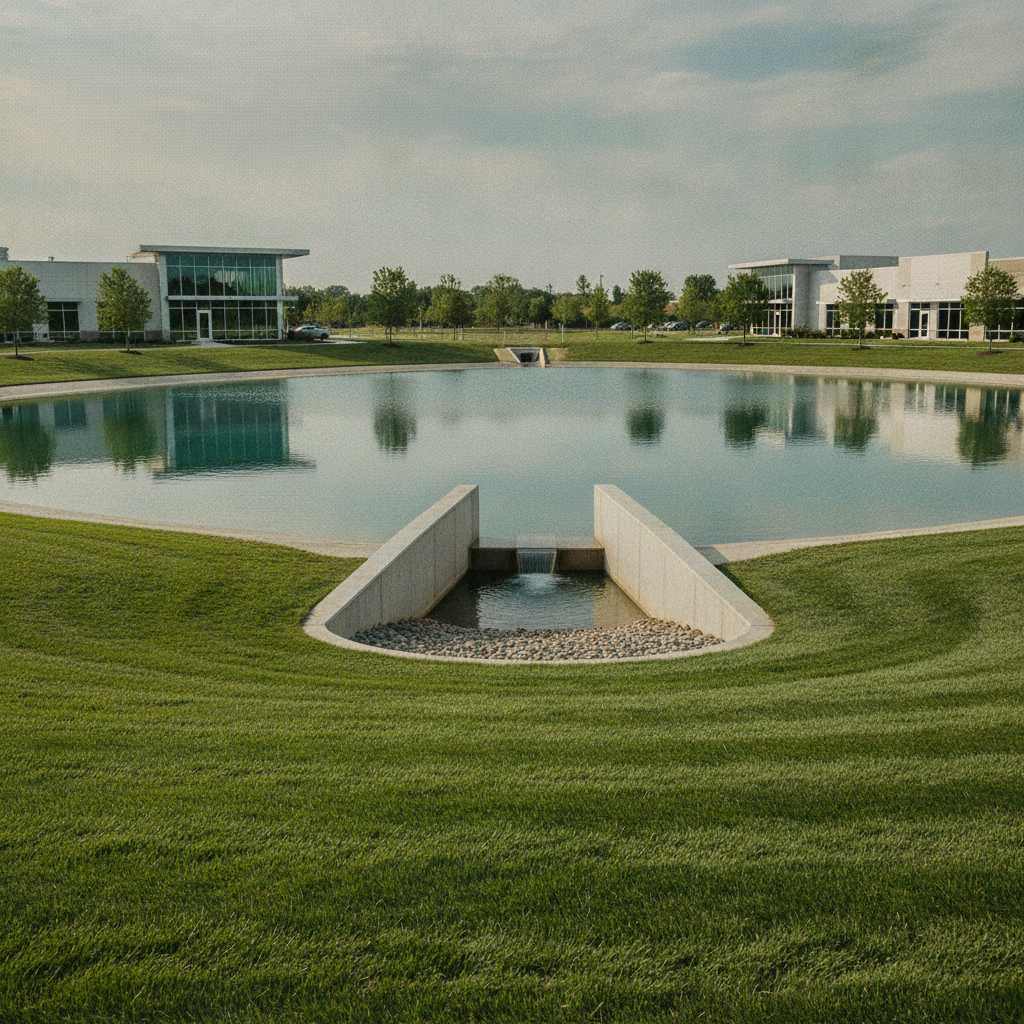
A detention basin is designed as a temporary holding reservoir. During heavy rainfall events typical of the Gulf Coast region, storm runoff fills the basin. The water is then gradually discharged into municipal storm sewers or local waterways through a calibrated orifice or control structure. Between rain events, a properly functioning detention pond remains entirely dry.
In practice, routine detention pond maintenance focuses heavily on preserving flat bottom grading, maintaining pilot channel flows, and preventing turf deterioration. If sediment or debris blocks the low-flow outlet, standing water can accumulate, leading to unintended ponding, mosquito breeding, and turf die-off.
Retention Ponds (Wet Basins) Explained
A retention pond, by contrast, is engineered to maintain a constant aquatic level. Runoff enters the pond during storm events, displacing a portion of the existing water volume over an elevated riser pipe or weir box. Because retention ponds permanently hold water, they rely on physical, biological, and chemical processes to treat stormwater pollutants before discharge.
Consequently, retention pond maintenance extends beyond surface landscaping. It encompasses shoreline erosion control, biological algae management, submerged aquatic weed abatement, and fountain or aerator mechanical maintenance.
🥧 Primary Causes of Stormwater System Non-Compliance
What Are the Core Requirements for Detention Pond Maintenance?
Proactive detention pond maintenance ensures that dry basins perform as designed during severe storm events while maintaining the professional curb appeal of your commercial site.
Turf Management and Vegetation Control
Regular turf maintenance is the cornerstone of dry basin upkeep. Uncontrolled grass, saplings, and invasive weeds impede water velocity, capture trash, and obscure structural components during municipal inspections.
Routine Mowing: Slope and basin bottoms should be mowed at scheduled intervals to maintain turf density and prevent woody growth from establishing deep root systems that compromise embankment integrity.
Debris and Litter Removal: Trash must be cleared prior to mowing to prevent shredded plastic and paper from clogging downstream control orifices.
Low-Flow Channel Upkeep: Concrete pilot channels must remain free of silt, gravel, and algae to prevent stagnant water collection between rain cycles.
Outlet Structure and Spillway Clearance
The hydraulic performance of a detention basin depends entirely on its control structures. Concrete weir walls, trash racks, and discharge pipes must remain free of blockages.
Trash Rack Clearing: Accumulated branches, leaves, and trash must be removed promptly after rain events.
Structural Integrity Inspections: Property managers should visually inspect concrete headwalls, joint seals, and rip-rap slope protection for cracking, displacement, or piping erosion around pipes.
"A detention pond that holds standing water longer than 48 to 72 hours post-storm is suffering from a hydraulic restriction or grading failure that requires immediate professional intervention."
What Does Effective Retention Pond Maintenance Involve?
Retention ponds offer attractive aesthetic features for corporate campuses and retail centers, but they demand specialized ongoing care to preserve water quality and bank stability.
Aquatic Plant and Algae Control
Nutrient-rich stormwater runoff carrying lawn fertilizers and surface pollutants often triggers rapid algae blooms and aquatic weed infestations in wet ponds.
Biological and Chemical Balance: Managed application of EPA-registered aquatic herbicides combined with beneficial bacterial treatments helps suppress planktonic algae and submerged weeds like hydrilla.
Aeration System Upkeep: Subsurface diffusers or floating display fountains introduce vital dissolved oxygen into the water column. Aeration accelerates organic decomposition, reduces foul odors, and inhibits anaerobic sludge buildup.
Erosion Control and Shoreline Stabilization
Wind-driven wave action, fluctuating water levels, and surface runoff can rapidly undermine retention pond shorelines. Left unchecked, bank erosion degrades property lines and deposits hundreds of tons of sediment into the pond basin.
Vegetative Buffers: Establishing deep-rooted native shoreline vegetation reduces bank sloughing and filters incoming surface runoff.
- Structural Armoring: In high-stress areas, installing geotextile fabrics, bulkheads, or stone rip-rap prevents structural bank failure and preserves storage capacity.
⚠️ Warning
Regulatory Compliance Alert: Local authorities, including Harris County Engineering Department and regional Municipal Utility Districts (MUDs), enforce strict stormwater quality rules. Commercial property owners who fail to maintain certified detention or retention structures risk official notices of violation, daily administrative fines, and delayed building permits.
Why Is Proactive Stormwater Infrastructure Maintenance Critical for Commercial Properties?
Deferring stormwater infrastructure upkeep creates significant legal, financial, and operational liabilities for commercial property owners.

Navigating Municipal Compliance and Regulatory Audits
Most municipalities across Greater Houston require annual inspections and engineered certifications verifying that stormwater management facilities operate according to original design specifications. A structured maintenance program ensures your facility remains audit-ready throughout the year.
Based on real-world maintenance observations, commercial facilities operating under routine, scheduled maintenance agreements reduce unbudgeted emergency repair expenses by up to 40% compared to properties utilizing reactive repair models.
📈 Recommended Annual Maintenance Service Frequencies
Preventing Costly Sediment Dredging and Structural Overhauls
Sediment accumulation is an inevitable reality for both detention and retention basins. When slope erosion and organic debris go unmanaged, sediment volume gradually reduces the pond's designed storage capacity. Major hydraulic dredging operations to restore baseline depth can cost tens of thousands of dollars. Proactive perimeter stabilization and routine forebay cleanouts mitigate sediment transport into the main basin, extending the operational lifespan of the asset.
"Craftsmanship in stormwater management isn't just about mowing grass—it is about preserving structural hydraulics, protecting surrounding real estate assets, and demonstrating regulatory due diligence."
Key Takeaways for Property Managers
- 1 Know Your System: Confirm whether your site utilizes a dry detention basin or a wet retention pond, as maintenance scope and compliance metrics differ significantly.
- 2 Schedule Regular Inspections: Outflow structures, emergency spillways, and shoreline banks should be evaluated monthly and after every major storm event.
- 3 Prioritize Swift Responsiveness: Addressing minor shoreline erosion or minor outfall blockages today prevents catastrophic structural failures and municipal citations tomorrow.
Maintaining Commercial Property Value with Professional Services
Managing commercial stormwater assets demands technical knowledge, specialized equipment, and dedicated execution. At New Leaf Services, we bring uncompromising craftsmanship, rapid responsiveness, and strict professionalism to every commercial property we serve. From routine turf management and outlet structure clearing to aquatic weed control and erosion repair, our team provides comprehensive solutions tailored to your property’s unique infrastructure needs.
Contact New Leaf Services today to schedule a thorough stormwater facility inspection and establish a dependable maintenance plan for your commercial site.